Showing posts with label stop. Show all posts

Wednesday, July 13, 2011

The debate over the incandescent light bulb…

Blog week of July 10th

Opponents claim that current light bulb laws are anything but bright...

In 2007, Congress passed an energy act that requires light bulb manufacturers to upgrade the efficiencies of their products.  This act is part of an extensive federal movement to encourage Americans to use resources – in particular energy, more wisely.  While most agree that the intent behind the initiative is good, some lawmakers believe that the method behind the 2007 legislation wrongfully prevents consumers from buying traditional, cheap incandescent bulbs.

The Republican coalition is led by Texas representative Joe Barton, who argues that personal liberties are at stake as a result of the law and that the federal government must be mindful of the ideological implications of its actions with respect to the Constitution.  The so-called Barton bill is currently circulating in the House and its proponents point out that alternatives, such as CFL and LED light bulbs, cost much more than traditional incandescent bulbs and that some even pose health risks with their mercury content.

Democrats assert that consumers will save money, despite the extra cost of fluorescent and LED bulbs, because the efficiency of these bulbs will be accounted for in immediate savings on energy bills, not to mention the overall longevity of the lighting source compared to tradition incandescent bulbs.  Additionally, opponents of the Barton bill contend that the small concentration of mercury in compact fluorescent lamps (CFLs) and advances in technology, make any perceived health threat negligible.  The Obama administration officially opposes the bill because it would repeal measures that encourage technological innovation, increase employment, and reduced emissions.

If the 2007 act remains intact, 100-watt light bulbs will no longer be available for purchase from most vendors after January 1st, 2012.  75 watt, 60 watt and 40 watt bulbs will follow suit within the next three years following the January 1st threshold. For comparison sake – that 60-watt incandescent bulb (the most popular kind) can be replaced by a 13-watt compact fluorescent light bulb (CFL), or a 4-watt LED light bulb. In addition to the impressive wattage savings of 47 and 56 watts respectively, most CFL light bulbs have a 10,000-hour lifetime, compared to just the 1,000-hour lifetime of an incandescent bulb. Furthermore, LED light bulbs have an amazing 50,000-hour lifetime, meaning it will last up to 50 times longer than the traditional incandescent bulb! While the up-front costs are obviously more than the incandescent bulb, the long-term investment is certainly well worth it by both the amount of energy the bulb consumes as well as its relatively long life span. With technology and demand increasing daily, the type of CFL and LED bulbs being produced are becoming more diverse, offering more choices for consumers at even lower prices. With the government as a driver, the prices for these advanced lighting technologies will soon reach market parity in that it will cost the same as traditionally inefficient incandescent bulbs. Sounds like a bright idea to me!

One Stop Green is looking towards a ‘greener’ future, sharing the latest and greatest ideas in green living and green technology with you through our staff written blogs.  Going 'green' is no longer a choice, it's our responsibility, that's why it's so important to try and do the small things that can help change the outlook of the planet - and this is essentially the purpose of One Stop Green.  We believe even the little things like recycling or using less water helps the environment out in a big way, and that's why our various solutions seek to nurture and edify your home or business in an eco-friendly manner.

Visit our website at www.onestopgreen.com or download the mobile app at http://fwd4.me/01gP 

one stop green House Representatives incandescent bulbs energy act Joe Barton bill efficient LED health risks mercury fluorescent Obama administration innovation employment emissions 2007 100 watts January 1st

Monday, July 4, 2011

Cooking Green! And We Don't Mean Green Meat

Blog Week of July 3rd

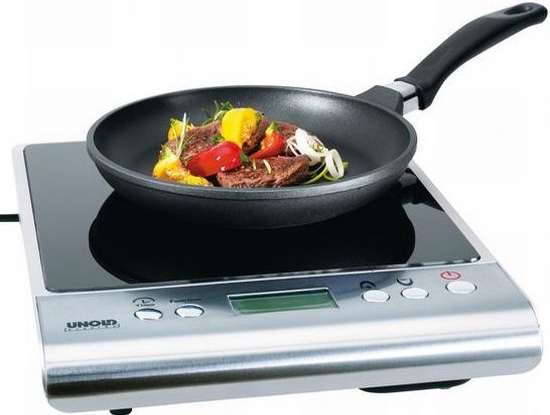
Remember that old adage, ‘if you can’t take the heat, get out the kitchen?’ Now it’s, ‘if you can’t take the heat, just get an induction burner!’

We all remember that old saying, “If you can’t take the heat, then get out of the kitchen?” Although often applied to real life situations, there is certainly a literal sense to the meaning. With summer in full bloom, the sun is shinin’ bright and that means it time to get together for family gatherings – most likely in the form of outdoor BBQ’s. But it’s hotter than ever outside making it both difficult and inconvenient and all the massive heat that comes from both gas and electric stoves makes this experience that much more dreadful. 

If you are like me, you have probably wondered if there were easier ways to enjoy cooking without all of the extra heat! Cooking without the extra heat is something that is unknown to the average American but now there is a way. 

General Electronics stated in a press release, “Although popular in European and Asian households and among professional chefs worldwide, induction cooking is still largely a mystery for many North American consumers.” With induction cooking, a current is produced when a steel or iron bottom pan is placed on the cook top, which has an electromagnetic element under its smooth surface. The current passes through the cook top and heats the pan and cooks the food inside. Nearly all the energy is transferred directly to the magnetic cookware and the food, making induction cooking quick and efficient. Because there is no residual heat from burners, cooking adjustments are nearly instantaneous and precise.” 

Essentially, all the heat is transferred to the actual pan and not the cooking surface. This provides a safer alternative as well as because no heat is transferred to a nonferrous object such as plastic, paper, cloth, or even a hand that touches the cooking area! This in turn creates a cooler and safer cooking environment that is also easy to clean.

The advent of new technologies is now allowing us a greener and cleaner way to do everyday things like cooking. So get ready for July 4th, put on your new summer outfit, and take the fun outdoors!

One Stop Green is looking towards a ‘greener’ future, sharing the latest and greatest ideas in green living and green technology with you through our staff written blogs. Going 'green' is no longer a choice, it's our responsibility, that's why it's so important to try and do the small things that can help change the outlook of the planet - and this is essentially the purpose of One Stop Green. We believe even the little things like recycling or using less water helps the environment out in a big way, and that's why our various solutions seek to nurture and edify your home or business in an eco-friendly manner.

Visit our website at www.onestopgreen.com or download the mobile app at http://fwd4.me/01gP


Keywords: induction cooking, green cooking, green cookware, cooking easy, no heat, innovative cooking, eco-friendly cooking, july 4th cooking, cooking with less heat

Sunday, June 26, 2011

The Two Flush System – A Secret in Water Conservation


Week of June 26th

The Two Flush System – What is it and how does it work?

My first encounter with a two flush system was on my first visit to Israel in 2007.  Quite honestly, I had no idea why the toilet had 2 buttons, or 2 levers, depending on the setup.  It took some experimentation to figure out the difference, but basically different amounts of water were released depending on which was pressed.

Less water is needed to flush urination because the liquid mixes and flows with the flushed water.  So the smaller button or lever is pressed and the toilet does the rest using a reduced water flow.  For bigger loads, the big button or lever is used so the extra water keeps your bowl looking nice.

Two flush systems are rarely seen in the United States, or at least in Texas.  However, historically water has not been as hard to come by in the United States, as it is in Israel, where a large portion of the country is desert.  Israel’s commitment to water conservation is quite strong with much of the water going toward irrigation and turning parts of the Negev Desert into an agricultural region.  For Israel, conservation is especially important in their dry season, roughly through the summer and autumn months.

While big “Green” news items usually relate to finding renewable energy, saving water is just as important.  Water on the Earth is a set resource and only about 2% is fresh water in lakes, rivers, ice, and the atmosphere.  Overuse and pollution makes even less of what little water is available fit for consumption.

Currently in the United States, a large portion of the states bordering Mexico and the Gulf of Mexico are experiencing drought conditions.  In Texas, Louisiana, and Florida, all divisions are experiencing drought, and all but one in New Mexico is experiencing a drought.  In San Antonio, where I am from, Stage 2 water restrictions are in effect based on the level of water in the Edwards Aquifer at one particular well.  In the drier summer months, this has become a surprisingly regular occurrence as the rain the rest of the year is not enough to slake the city’s thirst during the summer.  During these restrictions, the city sets regulations as to when water can be used for what; this includes restricting days and times lawns can be watered and whether car washing is legal.

Two Flush System retrofits are available for just about any toilet.  The retrofits are a simple and inexpensive way to reduce how much water you can use per flush.  Most are simple enough to install as a do-it-yourself project in an hour or less.  They fit nearly all standard household toilets and even accommodate the low-flow 1.6 gallon toilets that are all but standard in new construction.  Retrofit kits can get pricey, but there are inexpensive options under $100.

While water conservation is relatively untouched by the media and politicians, it is an important part of Going Green and using resources wisely.  Two Flush Systems have been proven in other places and could be an integral part of cutting down water use domestically.

One Stop Green is looking towards a ‘greener’ future, sharing the latest and greatest ideas in green living and green technology with you through our staff written blogs. Going 'green' is no longer a choice, it's our responsibility, that's why it's so important to try and do the small things that can help change the outlook of the planet - and this is essentially the purpose of One Stop Green. We believe even the little things like recycling or using less water helps the environment out in a big way, and that's why our various solutions seek to nurture and edify your home or business in an eco-friendly manner. 

Visit our website at www.onestopgreen.com or download the mobile app at http://fwd4.me/01gP

Wednesday, June 15, 2011

The End of Incandescents - How to Keep the Lights On

Blog Week of June 5th

The end of the Incandescent bulb is just the Beginning of the Future…

The end of the incandescent bulb as we know it is near thanks to a law signed by former President George W. Bush in 2007.  While not banning the bulbs outright, the law requires incandescent bulbs to be 25% more efficient and dictates a phase-out of inefficient bulbs beginning in January 2012.

The 100-watt incandescent bulbs will be some of the first to go and as rolling deadlines between 2012 and 2014 come and go, more of their incandescent brethren will join them.  While the law doesn’t require the use of compact fluorescent (CFL) bulbs, it will however slowly phase it out, giving compact fluorescents (CFL’s) and Light Emitting Diodes (LED’s) a leg-up in the marketplace.

Now, to clarify, this new law by no means outlaws incandescent bulbs outright.  It does however, mandate more efficient incandescent bulbs, which essentially means a phase-out of current models.  In fact, the National Electrical Manufacturers Association, a trade group representing light bulb manufacturers, has cited a new 72-watt replacement for traditional 100-watt bulbs.

Unfortunately, this has not curbed hoarding of current bulbs.  In a New York Times article, anyone from home decorators to restaurateurs to everyday citizens said they would buy their favorite bulbs in bulk from wherever they could be found.  At the lighting industry trade show, Lightfair, Philips unveiled a $40-50 LED bulb with a 25,000 hour lifespan and conservative personalities like Glenn Beck and Rush Limbaugh jumped on the fact that our government was banning current incandescent bulbs for $50 replacements (The Associated Press reported a $50 price tag and Fox News picked up their story spinning it as “As Government Bans Regular Light Bulbs, LED Replacements Will Cost $50 Each”).

On the upside for LED lighting, the future is only getting brighter.  While CFLs are considered the main alternative to incandescent lighting, they do have some negatives.  The biggest issue is that CFL bulbs contain mercury, making cleaning up a broken one a potentially dangerous proposition.  Some CFL’s also require a “warm up” period like the large halogen lights at your favorite sports stadium.  CFL’s are also more expensive than incandescent bulbs, however the energy savings make up for that after about 6 months.  And while CFLs last longer than incandescent bulbs, sometimes they don’t live up to their advertised expectations – so be sure to buy from a manufacturer who offers a limited warranty.

So why LED lighting?  The biggest plus is that their color better emulates incandescent bulbs and they outlast even CFL bulbs (by nearly ten times).  The technology behind LED lighting is the same semiconductors that are used in cell phones and computers, so as they improve, so does LED lighting.  LED’s are also gaining the backing of name-brand manufacturers, like Philips and Sylvania, and retailers like Home Depot and Lowe’s are now making them available in their stores.

For now, the advantages of LED lighting don’t counter the up front cost, so CFL bulbs are the better recommendation.  However, as technology improves and costs fall, LED lights are soon to become what the CFL became to the incandescent bulb – a game changer. In another decade or even less, CFLs could be phased out due to mercury issues leaving LED lights as our primary option.

If you are looking to go green and get rid of your incandescent lighting, One Stop Green carries both CFL and LED lighting options for nearly any application.  One Stop Green recently partnered with Earthmate Lighting to carry some of the smallest and greenest (down to the packaging) CFLs on the market.  One Stop Green’s LED lighting is made for residential and commercial applications as well and while more expensive that CFLs, LED lighting is even more energy efficient and emulates the incandescent lighting many people miss.

One Stop Green is looking towards a ‘greener’ future, sharing the latest and greatest ideas in green living and green technology with you through our staff written blogs. Going 'green' is no longer a choice, it's our responsibility, that's why it's so important to try and do the small things that can help change the outlook of the planet - and this is essentially the purpose of One Stop Green. We believe even the little things like recycling or using less water helps the environment out in a big way, and that's why our various solutions seek to nurture and edify your home or business in an eco-friendly manner. 

Visit our website at www.onestopgreen.com or download the mobile app at http://fwd4.me/01gP


Sunday, June 12, 2011

Creating the Ultimate Outdoor Living Space for the Summer!

Blog Week of June 12

The sun is shining and flowers are in full bloom - which means summer is a comin’! So who wants to stay indoors on a day like this?

Outdoor living areas are all the rage this summer and you are slowly running out of time to create your perfect space. Creating the ideal outdoor living space can be both an exciting and stressful project as there are a number of choices to choose from. Whether it’s an elegantly styled terrace with lounge chairs for watching the sunset or a modern outdoor kitchen complete with a counter top grill, this is one trend you’ll be happy to take part in!

Your process should begin by establishing a budget for your project. By setting aside a budget, you will be able to eliminate your range of choices to more realistic alternatives. Decide which features are most important to you and invest your funds there.

The next step is to make a plan! In order to effectively use your resources, you’ll need to come up with a plan before you break ground or even begin purchasing materials. Having a sound strategy before you begin the project ensures that you simply don’t run out of funds or determination halfway through the job. This plan should include the vision of your basic lay out as well as identifying what resources you already have to work with for your outdoor space.

The third and final step is to make it Green! Not only ‘Green’ an in eco-friendly but ‘green’ as in plant life and atmosphere. Make your outdoor space look like an indoor space to make it perfect for entertaining, but keep it green to emphasize nature. This means you need to take into consideration your lawn, plant life, and garden to add that perfect outdoor feel. Use natural lighting techniques such as candles or torches – or better yet, implement energy efficient LED lights to keep the party going all night long! Finally, put on those finishing touches by using recycled materials made from stone or wood to add to the décor!

So get ready, put on your new summer outfit, and take the fun outdoors!

One Stop Green is looking towards a ‘greener’ future, sharing the latest and greatest ideas in green living and green technology with you through our staff written blogs. Going 'green' is no longer a choice, it's our responsibility, that's why it's so important to try and do the small things that can help change the outlook of the planet - and this is essentially the purpose of One Stop Green. We believe even the little things like recycling or using less water helps the environment out in a big way, and that's why our various solutions seek to nurture and edify your home or business in an eco-friendly manner. 

Visit our website at www.onestopgreen.com or download our mobile app at http://fwd4.me/01gP

Monday, June 6, 2011

Lessons from Japan - Power Plant of the Future?

Blog Week of June 5th

What the U.S. should take away from the devastation in Japan. 

Before I begin, on behalf of the entire One Stop Green team, we would like to offer our sincerest condolences to those affected by the Japanese earthquake and tsunami on March 11th, 2011. 

Japan has long been a staunch user of nuclear power to keep its country energized and was relying on the controversial fuel for about 30% of its energy needs.  However in the aftermath of the tsunami, and the ensuing radiation leak at the Fukushima Daiichi nuclear power plant, there has been a stronger push for harnessing other sources of energy, one that we as Americans should hear loud and clear.

Leading the initiative is a Japanese telecommunications company named Softbank and it’s President & CEO Masayoshi Son. Mr. Son announced his company would work with local officials to construct 10 large solar power plants and would also set up the ”Natural Energy Council” to promote natural energy power generation. Son believes combining solar, wind, and geothermal sources can generate a significant amount of electricity and each method can be tailored to a particular region. Son’s string of solar energy facilities would cost about $100 million and run along eastern Japan as part of a solar belt.  The investment would also help revitalize tsunami-hit areas on the east coast and Softbank would fund 10 percent, with local governments contributing about $1.3 million each and the rest to be borrowed from additional banks.

Japanese Prime Minister Naoto Kan also recently scrapped a nuclear-based energy policy and plans on implementing a “Sunrise Plan” to put solar panels on all suitable buildings by 2030. Solar panels produce energy anywhere the sun shines and recognizing this, Japan is making the necessary efforts to rebuild their country with these long term benefits in mind. We too need similar policies and leadership to advance our country’s energy goals while simultaneously curbing our reliance on costly fossil fuels. 

The first step in accomplishing this is by raising general awareness as to the purpose and use of renewable energy. Renewable energy comes from energy resources that are continuously replenished through the cycles of nature and will never become exhausted. Unlike finite fossil fuels, renewable resources are continuously replenished and will not run out. Renewable energy resources are clean sources of energy and can be harnessed without damaging the environment, unlike using fossil fuels that release carbon dioxide (a greenhouse gas) and other harmful pollutants into the atmosphere. There are a number of options available to homeowners and businesses wishing to go the renewable route and currently there are grants available for domestic users who wish to install solar panels and technology, wind turbines, and other energy efficient products. Information relating to these grants can be found on the www.dsireusa.org or visit www.OneStopGreen.com for further details.

One Stop Green is looking towards a ‘greener’ future, sharing the latest and greatest ideas in green living and green technology with you through our staff written blogs. Going 'green' is no longer a choice, it's our responsibility, that's why it's so important to try and do the small things that can help change the outlook of the planet - and this is essentially the purpose of One Stop Green. We believe even the little things like recycling or using less water helps the environment out in a big way, and that's why our various solutions seek to nurture and edify your home or business in an eco-friendly manner. 

Visit our website at www.onestopgreen.com or download the mobile app at http://fwd4.me/01gP

Sunday, May 22, 2011

First Fully Integrated Electric Car Network?

Week of May 22, 2011

Better Place implements electric car network in Israel to ease "Range Anxiety" and Houston hosts Electric Vehicle Event

Mark my words, 2011 will go down as the year of the electric car.  The Nissan Leaf, the Chevy Volt, a plug-in Prius, and many other entries by major manufacturers are entering the market.  At the end of May, the Clean Economy Network of Houston, Texas is hosting an event called “The Evolution of Vehicles: Electric Vehicles and Houston” where these and other new electric vehicles will be demonstrated with a discussion to follow.

Just last week, Better Place, a manufacturer of electric cars and infrastructure announced it was rolling out a network to ease the “range anxiety” associated with electric cars.  The company plans to keep Electric Vehicles moving for distances beyond their stated battery life, making longer distance trips possible.

The concept ‘Better Place’ is pushing is focuses on interchangeable batteries.  Better Place is taking Renault Fluence Z.E. sedans and at their stations, users will have the ability to swap out batteries in as little as five minutes.  In addition, when parked at shopping centers, Better Place hopes to have charging posts available to put a little bit of charge back into cars.

The Renault Fluence cars would be bought minus the cost of the battery.  The battery would be bought through Better Place with a subscription that allows access to their charging network across the country.  Rates would be dependent on driving characteristics.

Better Place is also setting up a network in Denmark, where rates have been established from about $300 per month for 6,200 miles (10,000 km) to about $600 for unlimited miles.  There is also an initial subscription fee of $2,000, but in both Israel and Denmark, gasoline is pushing $10 per gallon.

In the United States, the Clean Economy Network of Houston is promoting Houston as a leader in electric vehicle technology for Texas.  Nissan rolled out the Volt for Texas in Houston, and hosted the Chevy Volt launch here as well.  Most recently, Houston also achieved designation as an ‘Electric Vehicle Readiness city’ and could be one of the first cities in the nation to host an elaborate electric vehicle network system. One Stop Green commends the work of the Clean Economy Network of Houston and their commitment to supporting the advancement of Electric Vehicles in the state of Texas. 

One Stop Green is looking towards a ‘greener’ future, sharing the latest and greatest ideas in green living and green technology with you through our staff written blogs. Going 'green' is no longer a choice, it's our responsibility, that's why it's so important to try and do the small things that can help change the outlook of the planet - and this is essentially the purpose of One Stop Green. We believe even the little things like recycling or using less water helps the environment out in a big way, and that's why our various solutions seek to nurture and edify your home or business in an eco-friendly manner. 

Visit our website at www.onestopgreen.com or download the mobile app at http://fwd4.me/01gP

Can Passing Trains Generate Electricity?

Week of May 22, 2011

Wind from passing trains can power your lights!
 
Trains are considered some of the greenest forms of mass transit, and in many cities, subways shuttle people from the suburbs to the city center.  Now, the creators of the “T-Box” have the ability to make trains even greener.  The T-Box is designed to harness the gust of wind accompanying passing trains and the electricity can be used to produce power for remote areas near the railroad tracks or railroad facilities along the line.

The T-Box fits between the railroad ties and is partially buried so that it’s out of the way of the train.  The creators, Qian Jiang and Alessandro Leonetti Luparini say that a train passing at 125 miles per hour produces a wind speed 50 ft/sec over the box.  A 700-foot train would produce 3500 watts of power over half a mile of track.  If the train is running near 200 miles per hour, the T-Box would produce almost 3 kilowatts of power.

For those who have ridden subways, the concept could possibly be used on the walls and ceilings of the subway tube.  While speeds would be lower in a subway, the confined space between the subway cars and the walls would increase the speed of the wind because the air is compressed and this electricity generated could also go towards powering the subway as well.

The United States just approved over $8 billion for high speed rail funding and soon the State of Texas will vote on legislation that would create a statewide rail system. The T-Box is yet another reason to promote cleaner forms of mass transportation as it could help offset the cost of its construction through the electricity it produces.  If you live somewhere like New York or Washington D.C. with a subway, something like this could be used to a great benefit to riders.  The cost savings generated by the electricity could also be used to lower fares for customers. Furthermore, the T-Box only represents the tipping point, in highway-heavy states like Texas, modifications to the T-Box is something that could be integrated into highway systems to power street or traffic lights.

The T-Box is a great way to make a green mode of transportation even greener.  The underlying premise of sustainability implies that we use the resources available to us, so it is with that spirit that the T-Box uses otherwise wasted wind energy and harnesses it to work its way back into powering our society.
One Stop Green is looking towards a ‘greener’ future, sharing the latest and greatest ideas in green living and green technology with you through our staff written blogs. Going 'green' is no longer a choice, it's our responsibility, that's why it's so important to try and do the small things that can help change the outlook of the planet - and this is essentially the purpose of One Stop Green. We believe even the little things like recycling or using less water helps the environment out in a big way, and that's why our various solutions seek to nurture and edify your home or business in an eco-friendly manner.
Visit our website at www.onestopgreen.com or download the mobile app at http://fwd4.me/01gP